National Museum of Asian Art
Connecting Cultures Through the Arts of Asia.
The Smithsonian’s National Museum of Asian Art is one of the leading institutions dedicated to the preservation, study, and presentation of Asian art in the United States. Located on the National Mall in Washington, D.C., the museum is part of the Smithsonian Institution, the world’s largest museum, education, and research complex.
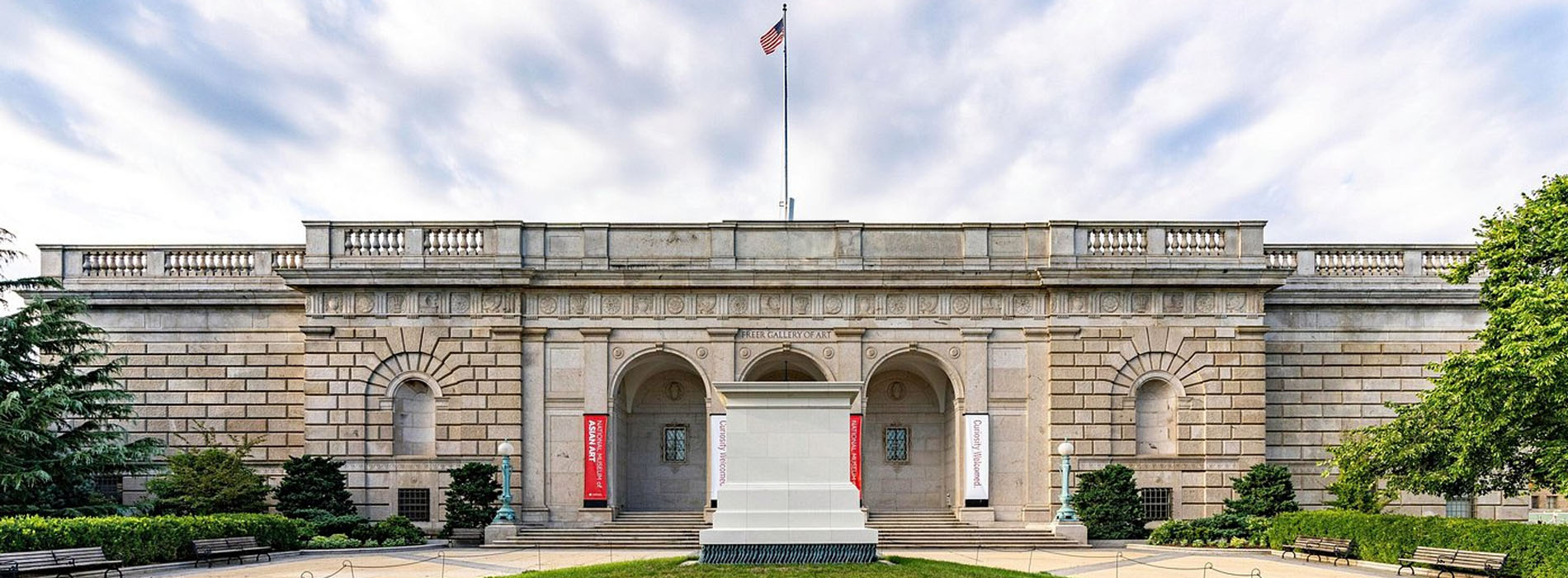
The museum comprises two interconnected institutions: the Freer Gallery of Art, which opened in 1923, and the Arthur M. Sackler Gallery, established in 1987. Together, they house more than 46,000 objects spanning thousands of years of artistic production, from ancient civilizations to contemporary practices.
Its extensive collections encompass works from China, Japan, Korea, South Asia, Southeast Asia, and the Middle East, alongside significant holdings of American art from the nineteenth and early twentieth centuries. The museum is particularly renowned for its collections of Chinese painting and ceramics, Japanese art, Islamic art, and works by American artist James McNeill Whistler.
Through exhibitions, scholarly research, conservation initiatives, and educational programs, the National Museum of Asian Art serves as an important international platform for cultural exchange, connecting the artistic heritage of Asia with contemporary global perspectives.
History
The National Museum of Asian Art traces its origins to 1906, when American industrialist and art collector Charles Lang Freer donated his extensive collection of Asian and American artworks to the United States government. His vision was to establish a museum that would encourage the study and appreciation of Asian artistic traditions alongside American art.
The Freer Gallery of Art officially opened to the public in 1923, becoming the first art museum on the National Mall and the Smithsonian Institution's first art museum. Designed by architect Charles A. Platt, the building was inspired by Italian Renaissance architecture and reflected Freer's commitment to creating a harmonious environment for experiencing art.
In 1987, the Arthur M. Sackler Gallery opened as the Smithsonian's second museum dedicated to Asian art. Established through the support of physician and collector Arthur M. Sackler, the gallery significantly expanded the institution's collections and exhibition capabilities, particularly in Chinese, South Asian, and Middle Eastern art.
Over the following decades, the Freer and Sackler galleries developed into a unified center for Asian art scholarship, conservation, and public engagement, operating together as the Smithsonian's National Museum of Asian Art.
In 2023, the museum celebrated the centennial of the Freer Gallery, marking 100 years of collecting, preserving, and presenting Asian art to audiences in the United States and around the world.
Today, the National Museum of Asian Art continues to expand its collections, international collaborations, and contemporary art programs, strengthening its role as a global institution dedicated to understanding Asia through art.
Mission
The Smithsonian's National Museum of Asian Art is dedicated to advancing the understanding and appreciation of Asian arts and cultures through collections, conservation, exhibitions, research, and public programs. By exploring the artistic traditions and cultural connections between Asia, America, and the wider world, the museum fosters curiosity, creativity, respect, and cross-cultural understanding.