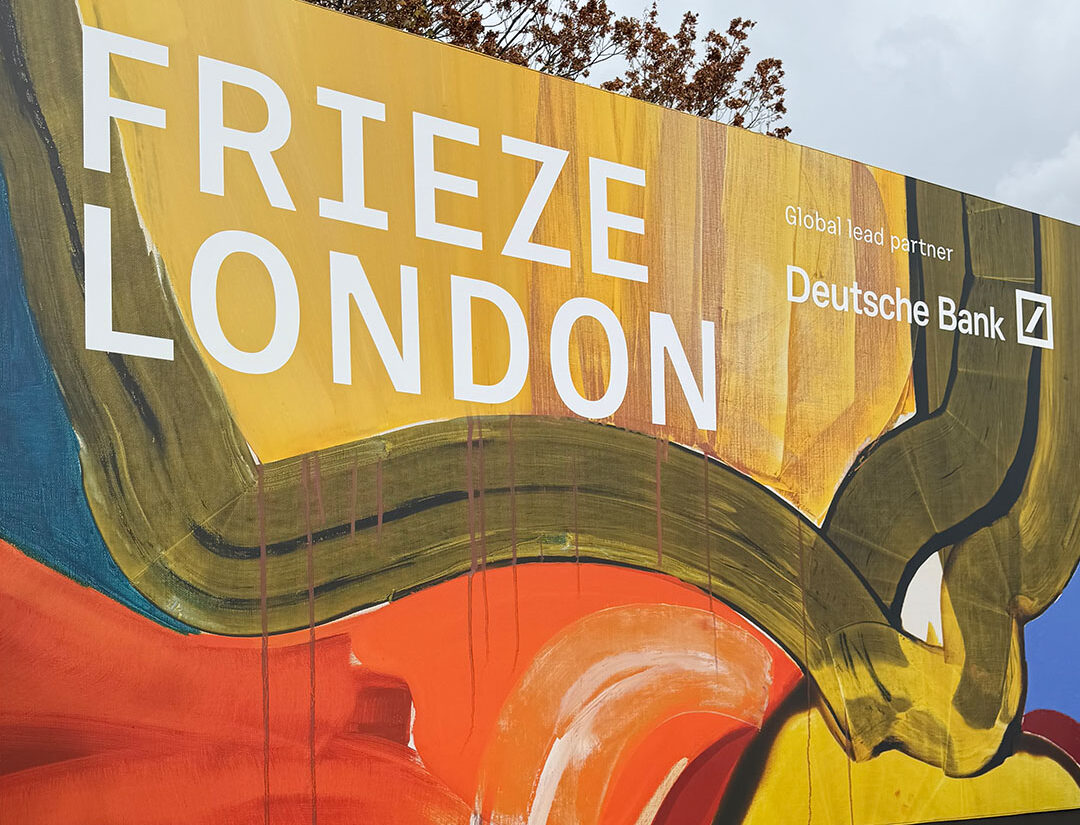
From expressive painting to experimental sculpture and textile-based practices, a selection of presentations at Frieze London 2026 revealed the many ways artists are rethinking materials, memory, and contemporary experience.
By Raymond Dong
Frieze London has long served as a meeting point for established artists, emerging practices, and galleries from around the world. Yet beyond the scale of the fair and the visibility of its participants, some of the most compelling encounters happen through individual works—those that invite viewers to pause, reconsider familiar materials, or question the boundaries between artistic disciplines.
At Frieze London 2026, several presentations stood out for their distinctive approaches to painting, sculpture, installation, and material experimentation.
Rather than pointing toward a single artistic movement or shared aesthetic, these works reflected the diversity of contemporary artistic expression, demonstrating how artists continue to develop personal languages through material, perception, and lived experience.
Asami Shoji: Painting Between Recognition and Uncertainty
Linseed Gallery
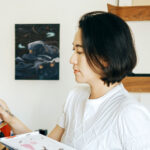
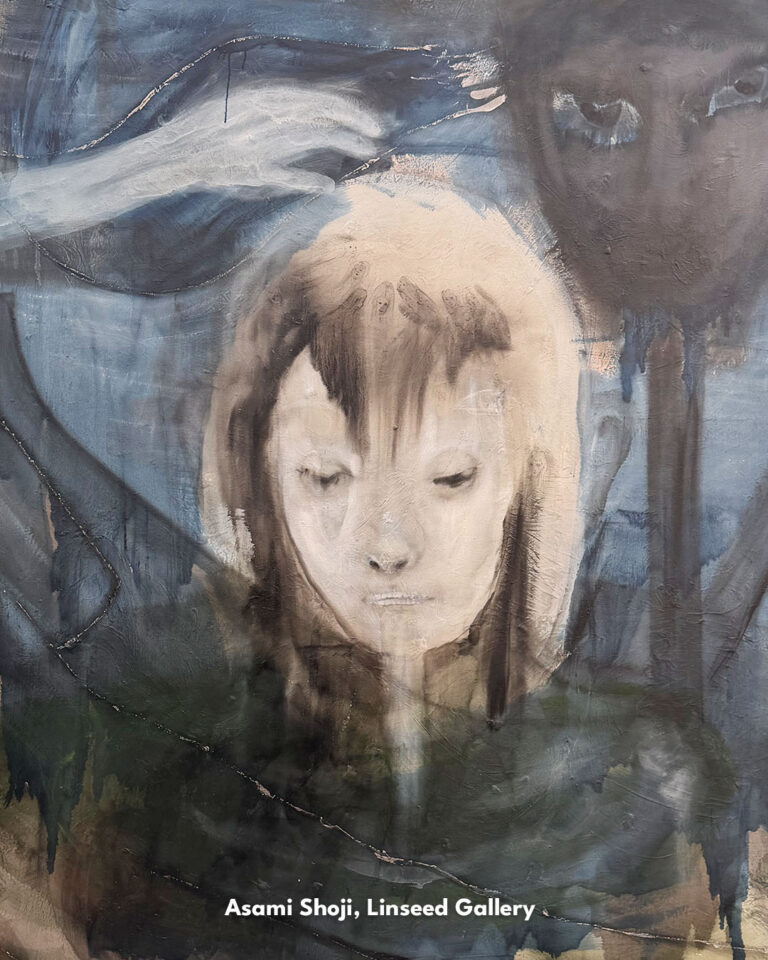
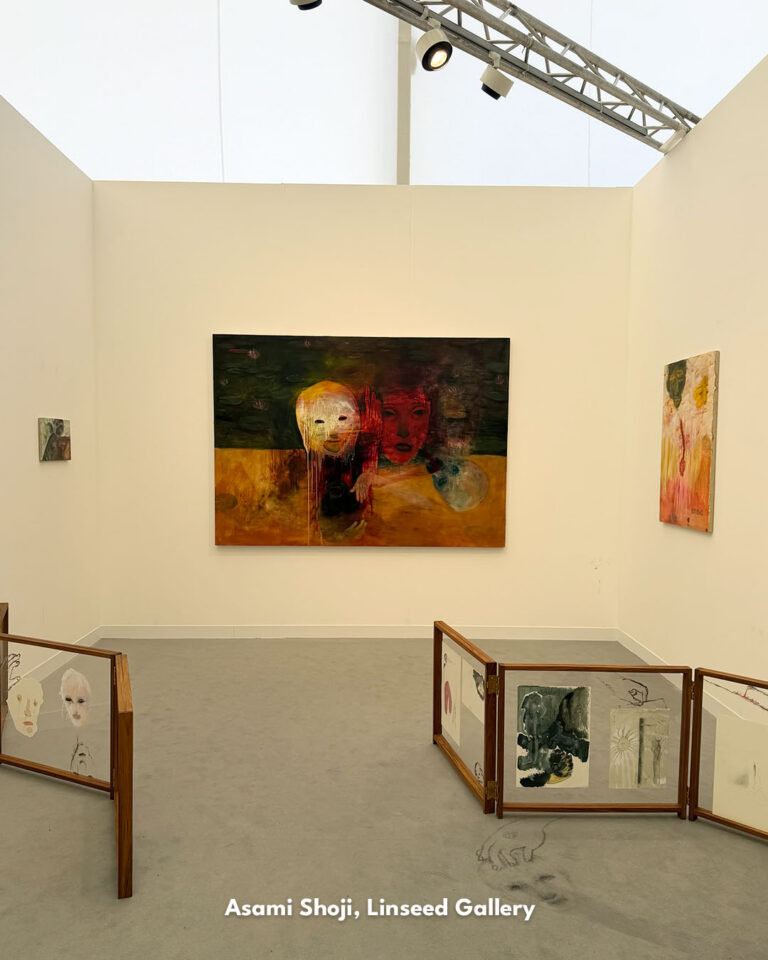
Among the presentations that drew attention was the work of Japanese artist Asami Shoji, presented by Linseed.
Shoji’s paintings occupy an intriguing space between figuration and psychological ambiguity. Faces and human forms emerge through expressive brushwork, layered colors, and compositions that resist straightforward interpretation.
Her figures appear simultaneously familiar and elusive. Rather than presenting clearly defined narratives, the paintings suggest emotional states that remain open to the viewer’s imagination.
The tension between recognizable imagery and painterly abstraction is particularly compelling. In some works, faces seem to dissolve into their surroundings; in others, the intensity of color and gesture creates a sense of immediacy that contrasts with the uncertainty of the subjects themselves.
At the fair, the presentation encouraged a closer consideration of how contemporary figurative painting can communicate emotion without relying on explicit storytelling.
Shoji’s work reminds us that the power of an image does not necessarily depend on what it reveals, but sometimes on what it leaves unresolved.
Steph Huang: Transforming the Familiar
Public Gallery
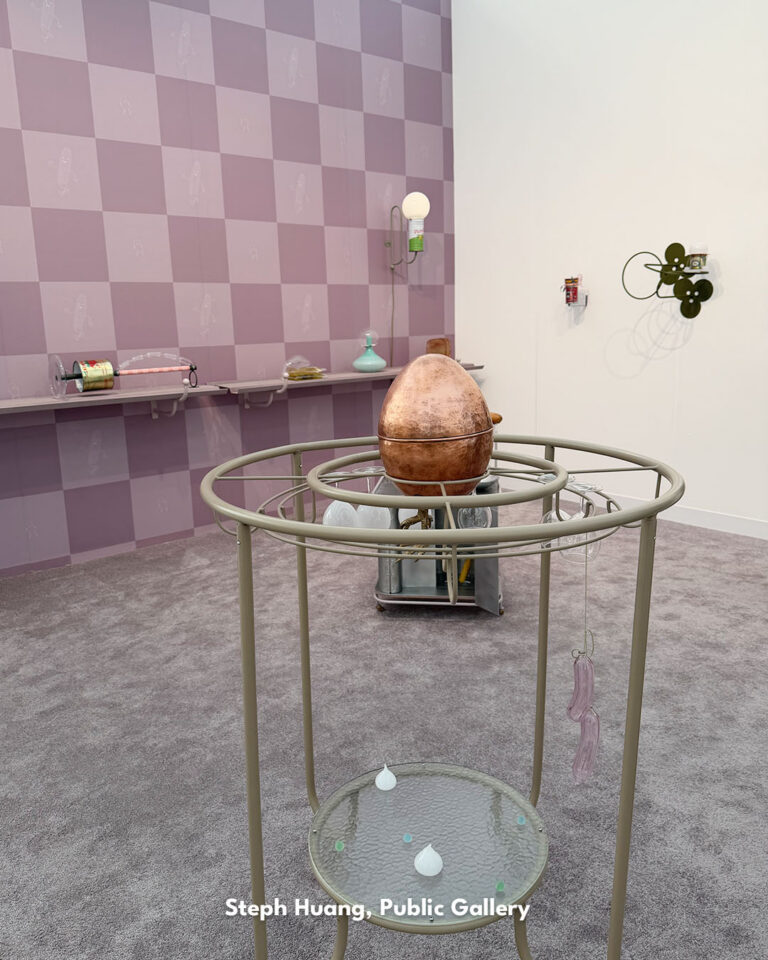
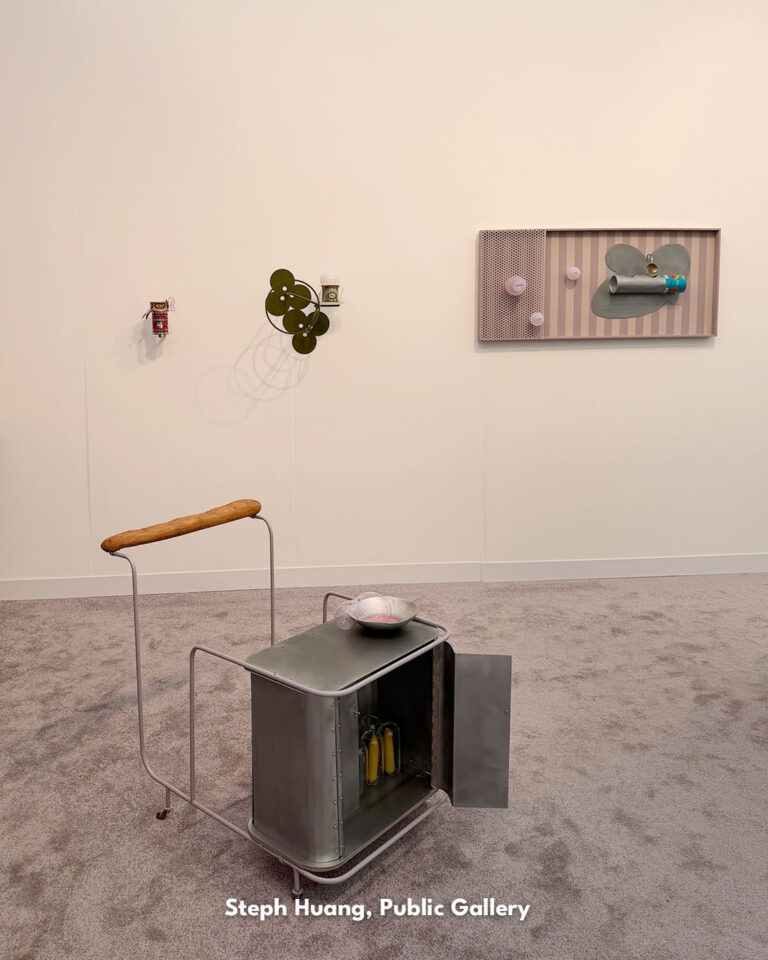
At Public Gallery, Steph Huang’s presentation offered a different kind of encounter—one grounded in the transformation of everyday objects and materials.
Huang’s sculptural practice draws attention to the things that surround us, often reconfiguring familiar forms into arrangements that shift between functionality, decoration, and abstraction.
Objects associated with consumption and ordinary routines take on new significance when removed from their expected contexts.
The resulting works can appear playful at first glance, yet they also invite questions about value, material culture, and the relationships people establish with the objects they use and discard.
What makes Huang’s approach particularly engaging is her ability to preserve a sense of familiarity while disrupting expectations.
The viewer recognizes elements of everyday life but encounters them through an unfamiliar visual language.
In the context of an art fair, where objects are frequently considered in relation to presentation and exchange, Huang’s practice offers an opportunity to reconsider the meanings attached to material things.
Anna Gonzalez Noguchi: Objects, Symbols, and Material Memory
Gallery Vacancy
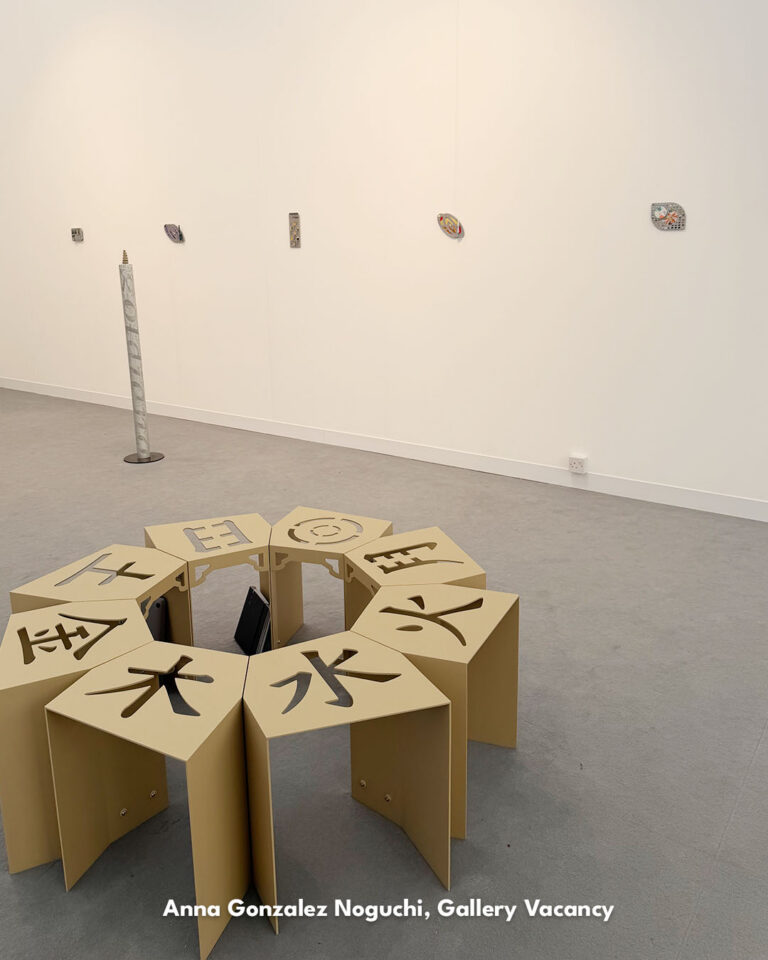
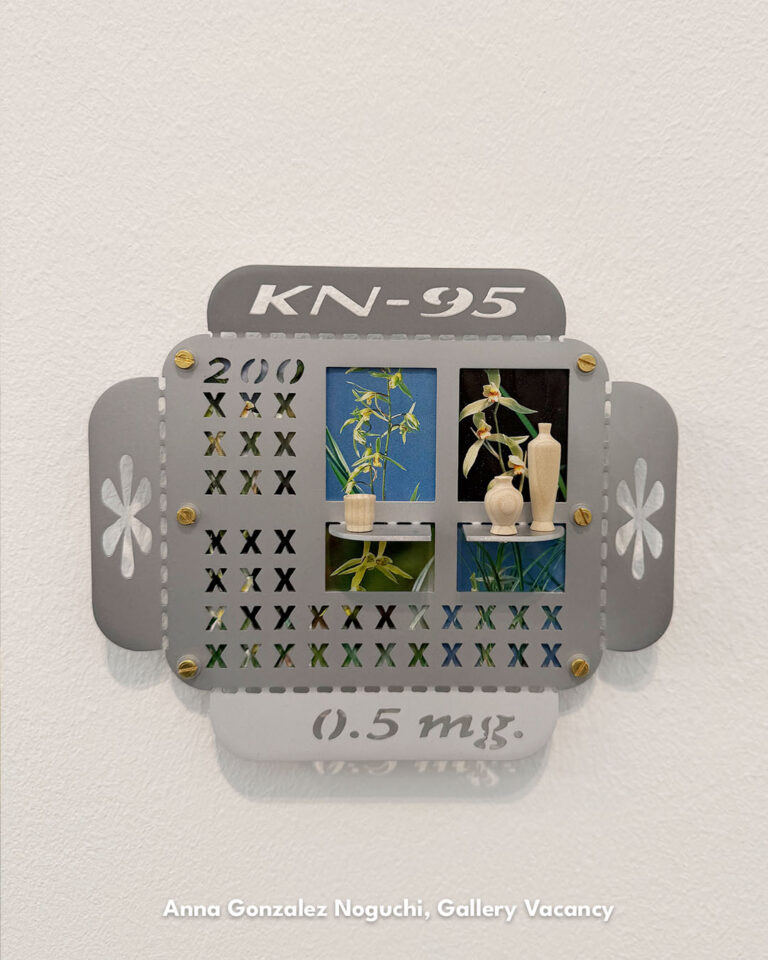
Anna Gonzalez Noguchi’s presentation at Gallery Vacancy introduced another perspective on the relationship between objects and meaning.
Her installation brought together sculptural forms and symbolic details, creating an environment that invited viewers to move between the individual components and the arrangement as a whole.
The works suggested connections between material objects, cultural references, and the ways meaning is constructed through visual association.
Rather than offering a single interpretation, the installation encouraged viewers to consider how objects can carry different associations depending on their context.
The arrangement of forms was particularly significant. Their placement established relationships that extended beyond the individual sculptures, making the surrounding space an active part of the work.
Noguchi’s presentation demonstrated how installation can function not simply as a collection of objects, but as a framework through which viewers encounter and interpret them.
Don Gallery: Material Traditions in Contemporary Practice
Lin Fanglu, Zhang Ruyi, and Koushna Navabi
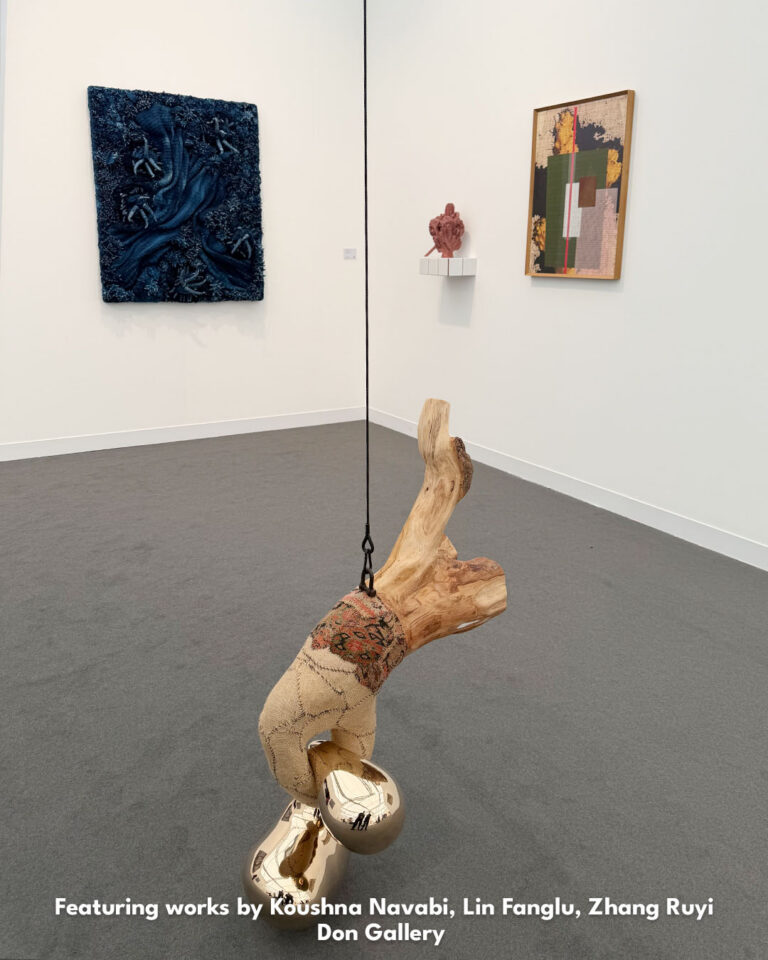
At Don Gallery, the juxtaposition of works by Lin Fanglu, Zhang Ruyi, and Koushna Navabi offered an especially engaging dialogue between material, process, and artistic expression.
Although their practices differ considerably, each artist approaches materials as more than a means of constructing an image or object.
For Chinese artist Lin Fanglu, textiles provide a connection between traditional craftsmanship and contemporary sculptural expression.
Her practice draws upon research into regional textile traditions in China, including collaborations with women artisans working with traditional dyeing and weaving techniques.
Through folding, binding, and manipulating fabric, Lin transforms textile processes into sculptural forms that emphasize texture, volume, and physical presence.
Her work challenges conventional distinctions between craft and fine art while recognizing the cultural knowledge embedded in material practices.
Zhang Ruyi, meanwhile, approaches everyday and industrial materials through a different conceptual framework.
Working with concrete, ceramic tiles, and other construction-related elements, Zhang explores the relationship between objects, architectural environments, and contemporary urban experience.
Her sculptures often bring familiar materials into unexpected configurations, creating subtle tensions between the functional and the symbolic.
In contrast, Koushna Navabi combines materials such as bronze, wood, and textiles in sculptural compositions that bring natural forms into contact with culturally resonant objects.
Her work introduces questions of memory, displacement, and the meanings that materials acquire through personal and collective experience.
Seen together, these practices illustrate how contemporary sculpture can emerge from vastly different material traditions without losing the specificity of each artist’s approach.
The presentation was particularly compelling because it allowed these differences to remain visible rather than forcing them into a unified aesthetic.
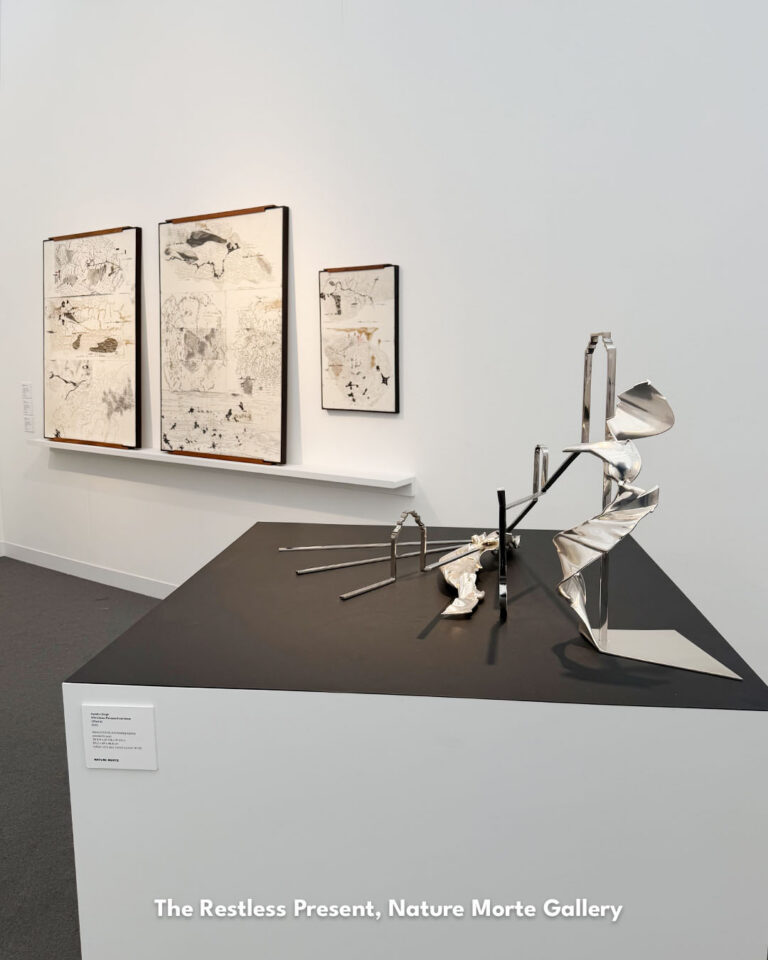
Nature Morte: The Restless Present
Curated by Habda Rashid
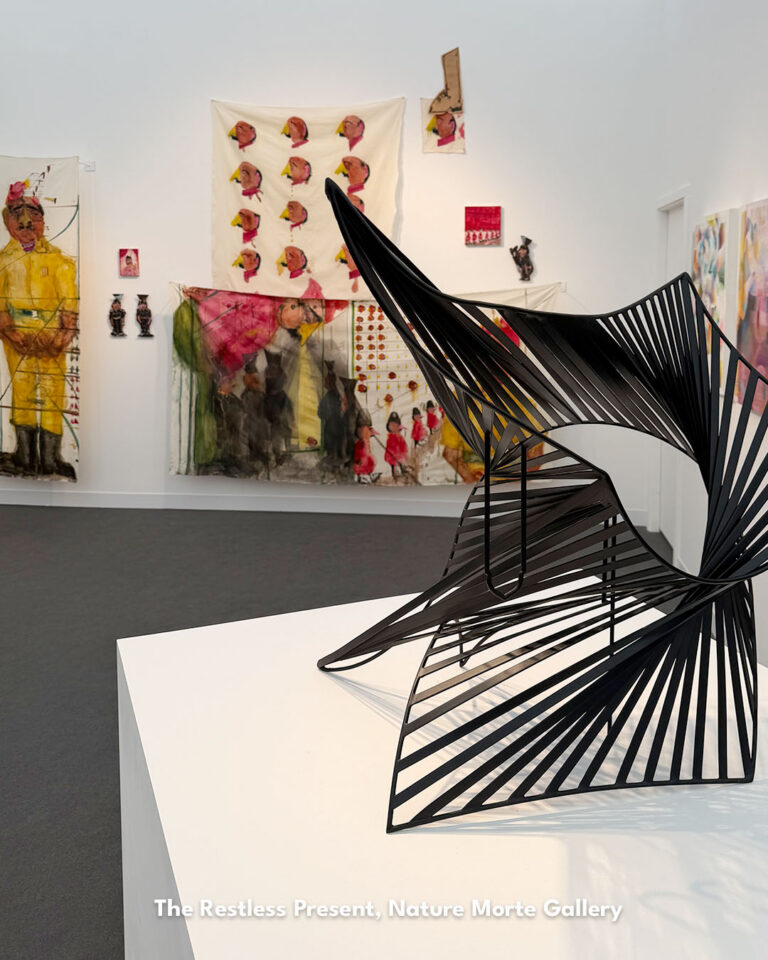
Nature Morte’s presentation, The Restless Present, offered a broader perspective on contemporary artistic practices across South Asia and its diaspora.
Curated by Habda Rashid, Senior Curator of Modern and Contemporary Art at the Fitzwilliam Museum, University of Cambridge, the presentation brought together works by Bharti Kher, Jitish Kallat, Subodh Gupta, Tanya Goel, Kuldeep Singh, Aiza Ahmed, Ayesha Singh, and Pushpamala N.
The exhibition explored the relationship between cultural memory, historical traditions, and contemporary artistic expression.
Bringing together artists with distinct practices and perspectives, The Restless Present resisted the idea that South Asian contemporary art can be understood through a single visual language or cultural narrative.
Instead, the presentation highlighted the ways artists engage with history and the present through different formal and conceptual approaches.
Within the wider context of Frieze London, it offered a reminder that regional or cultural frameworks can provide meaningful points of connection without defining the limits of individual artistic expression.
Beyond the Booth
What made these presentations memorable was not their adherence to a particular trend, but their ability to create distinct encounters between viewers, materials, and ideas.
Asami Shoji’s paintings explored the emotional possibilities of figuration, while Steph Huang transformed familiar objects into unexpected sculptural propositions. Anna Gonzalez Noguchi used installation to investigate the relationships between objects and meaning.
At Don Gallery, Lin Fanglu, Zhang Ruyi, and Koushna Navabi demonstrated the expressive possibilities of different material traditions, while Nature Morte’s The Restless Present brought multiple artistic perspectives into conversation.
Together, these presentations reflected an important aspect of contemporary art: its capacity to accommodate difference without requiring a common visual or conceptual language.
ACFA engaging with these works also raises a broader question about how artists are introduced, discussed, and understood. Cultural background and geographic context can offer valuable insights, but they should not become the primary frameworks through which artistic practices are evaluated.
The most compelling works often move beyond such categories, inviting attention to the specific decisions, materials, and ideas that shape them.
At Frieze London 2026, these were the encounters that stayed with us—not because they represented a single direction in contemporary art, but because each offered a distinctive way of seeing.
Frieze London 2026
October 14–18, 2026
The Regent’s Park, London
Photography: Raymond Dong
Images: © Raymond Dong. Artworks © the respective artists.