From a studio visit with LACMA’s Asian and Asian Diaspora Initiative to Night Gallery’s Idea of North, a reflection on chance, perception, and the moment a painting transcends its making.
By Raymond Dong
ACFA Focus | October 2026
The Unpredictability of Painting
What makes a painting compelling? Is it the artist’s intention, the technique employed, or something less tangible that emerges between the material and the viewer?
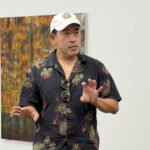
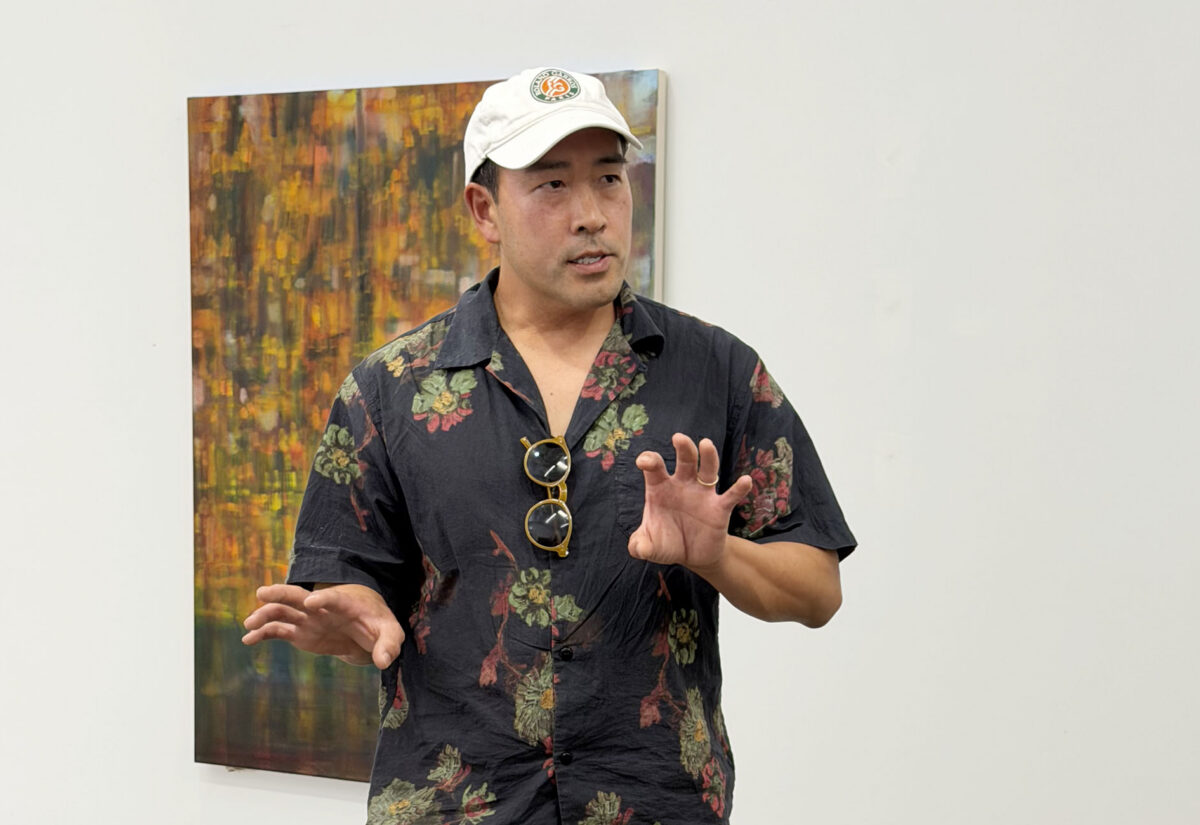
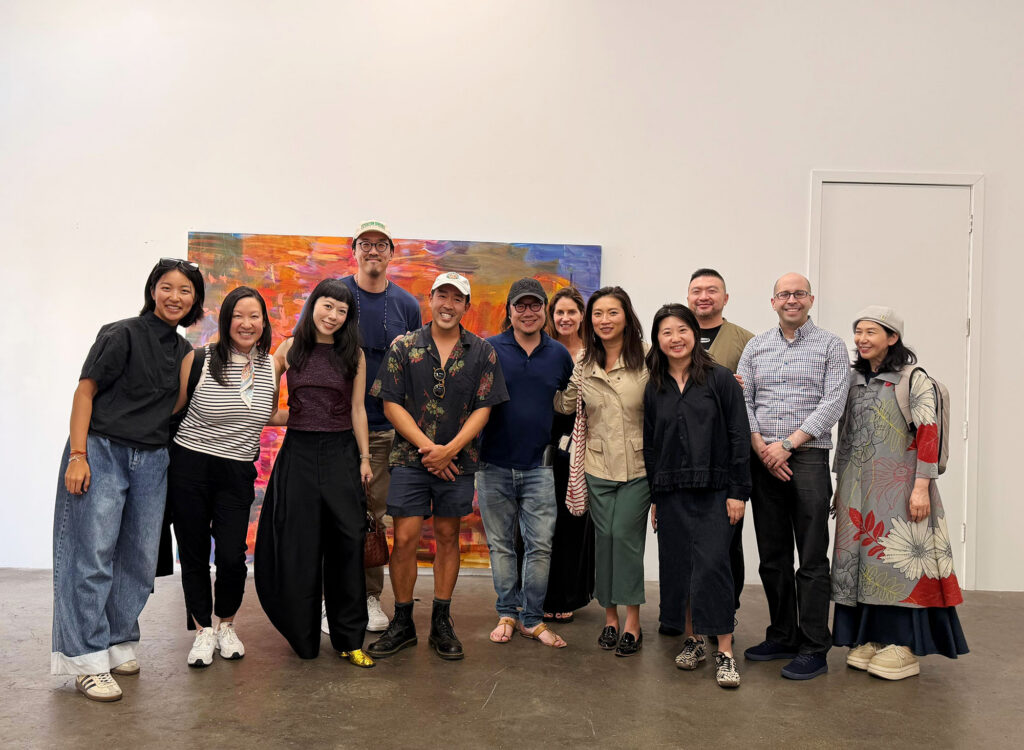
These questions came to mind during a studio visit with Los Angeles-based artist Ben Tong, organized by LACMA’s Asian and Asian Diaspora Initiative (LAADI). The visit offered a closer look at his paintings and the unconventional methods behind them.
Among the familiar painting materials in his studio was an unexpected object: a massage gun.
An avid tennis player, Tong keeps the device close at hand for muscle recovery. Yet in his studio, this everyday object takes on an entirely different role. Its mechanical vibrations introduce unpredictable movements into the paint, allowing pigment to respond to forces beyond the direct control of the artist’s hand.
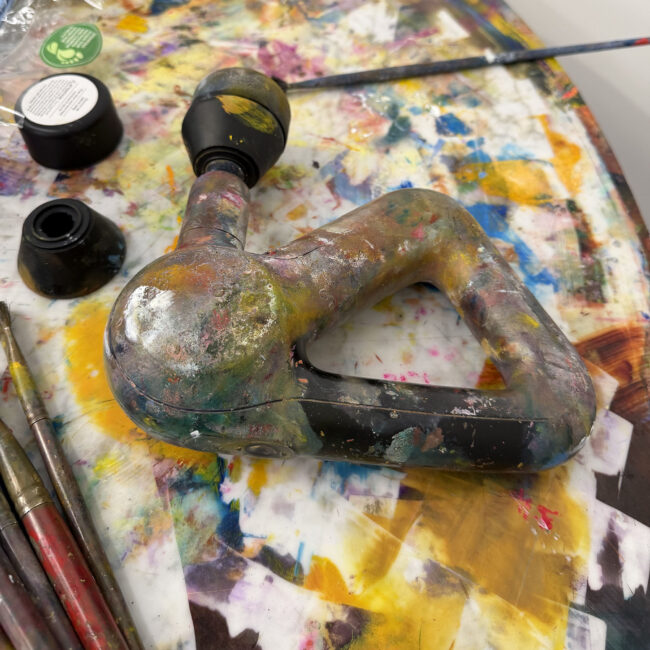
The transformation is intriguing. A device designed to relieve physical tension becomes an instrument for creating visual movement. It also reveals how artistic experimentation can emerge from ordinary experiences rather than a deliberate search for unconventional techniques.
Much like tennis, where precision and unpredictability coexist, Tong’s painting process suggests that control is not always about determining an outcome, but about responding to what happens next.
The artist initiates the process without fully controlling its results. Painting becomes a negotiation between intention, material, and chance.
Yet the more important question remains: what does the artist do with the unexpected?
Between Intention and Chance
Born in Toronto and based in Los Angeles, Ben Tong works across painting and other media. His practice explores the unstable relationship between images, perception, and the ways visual meaning is constructed.
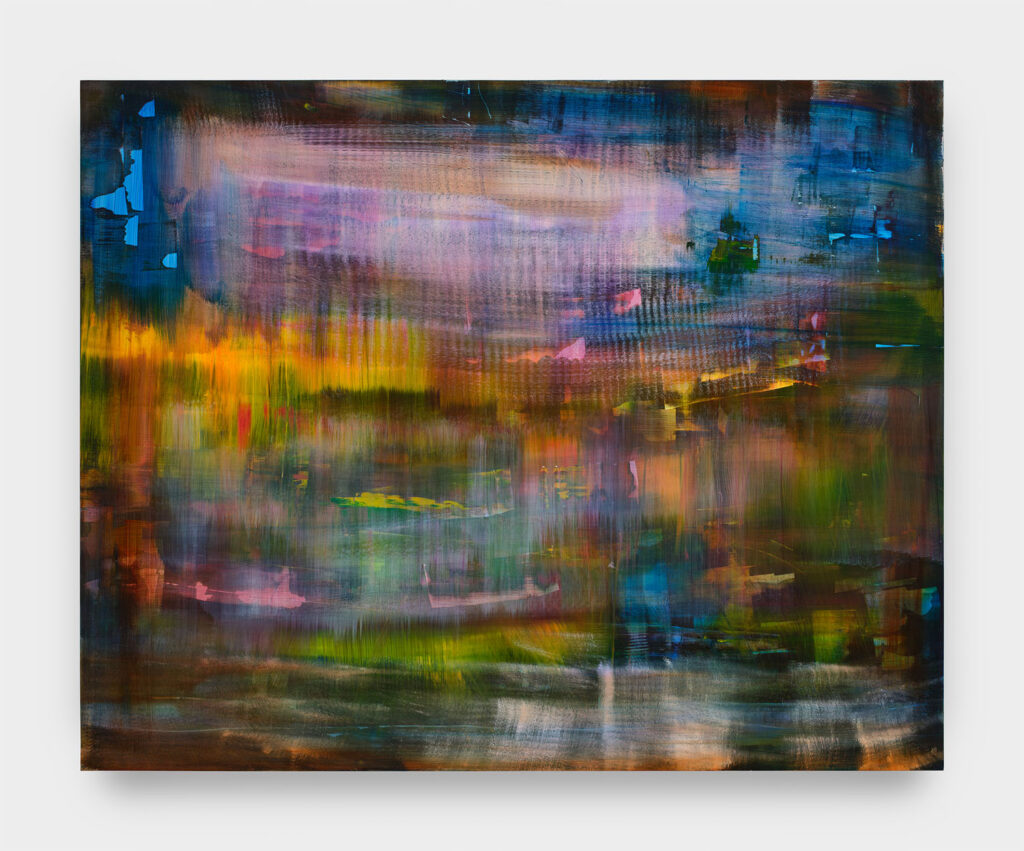
His paintings occupy an ambiguous territory between abstraction and representation. Layers of color overlap and dissolve, while recognizable forms emerge only to disappear into the surrounding surface.
Some compositions resemble landscapes glimpsed through rain-covered windows. Others evoke photographic images altered by movement, reflection, or imperfect memory. These associations remain provisional, resisting any single interpretation.
Tong seems particularly interested in the moment when an image becomes recognizable—and the equally fragile moment when that recognition disappears.
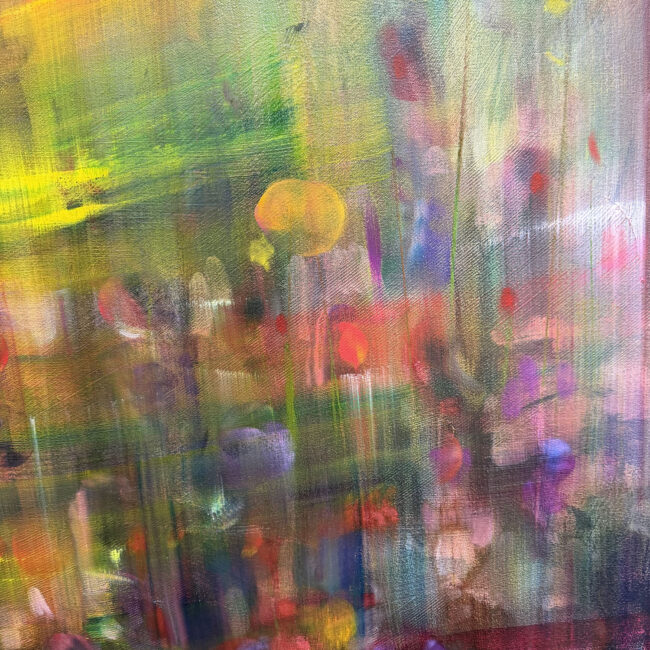
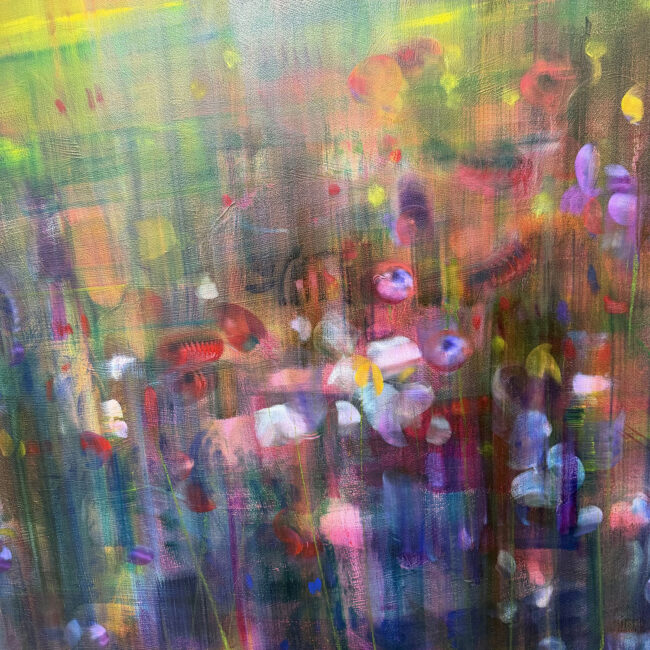
The use of unconventional tools contributes to this effect, but experimentation alone does not explain the work’s appeal. Artists have long introduced chance into painting, from Surrealist automatism to the gestural practices of Abstract Expressionism.
What matters is not the presence of unpredictability itself, but the artist’s ability to transform it into a convincing visual language.
A mechanical device may generate unexpected marks. It cannot determine whether those marks produce a compelling composition. That responsibility remains with the artist.
Tong’s strongest paintings balance spontaneity with sensitivity to color, rhythm, and form. Their surfaces feel simultaneously deliberate and unresolved, suggesting that artistic control may lie as much in responding to chance as in directing it.
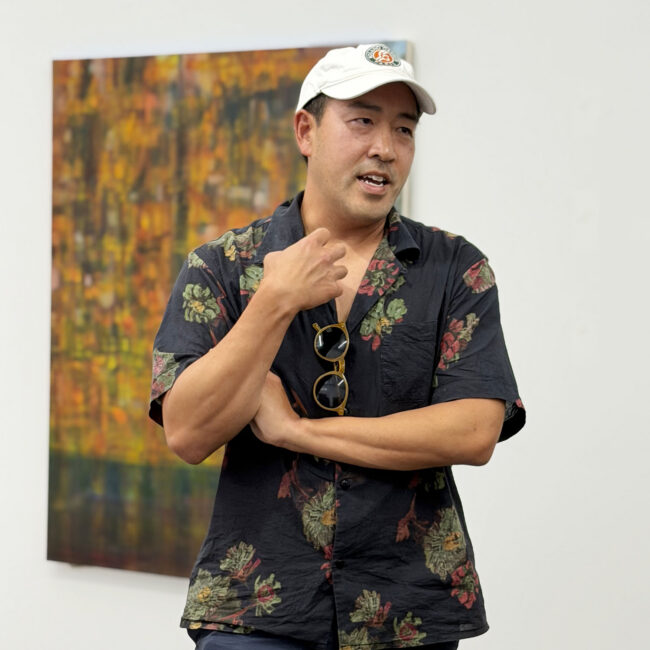
From the Studio to the Gallery
My understanding of Tong’s work changed when I subsequently visited Idea of North at Night Gallery in Los Angeles.
Having first encountered the paintings in his studio, I found their presentation in the gallery noticeably different. The works appeared more compelling, their visual complexity gaining clarity within the exhibition space.
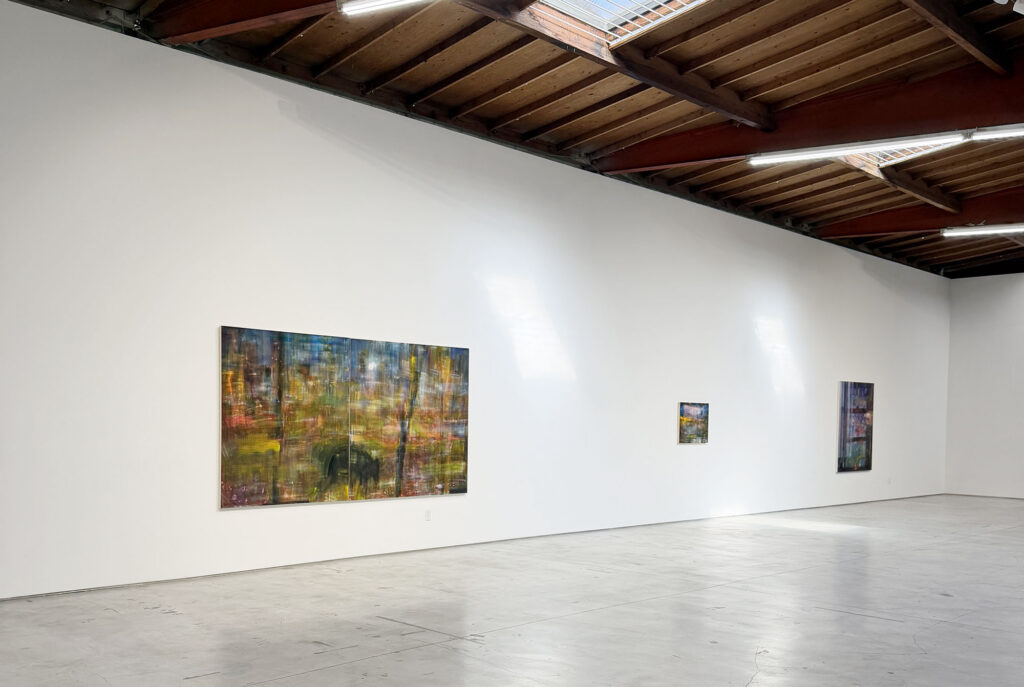
Night Gallery’s expansive white walls, exposed wooden ceilings, and skylights create an atmosphere of restraint. Generous spacing allows each painting to establish its own presence without competing with neighboring works.
This arrangement is particularly effective for Tong’s densely layered compositions. Their overlapping colors, fragmented imagery, and shifting depths benefit from the surrounding openness.
Natural light entering through the skylights also complements the paintings’ internal luminosity. The changing illumination across the gallery creates a subtle dialogue with works already concerned with light, atmosphere, and perception.
Yet the most significant difference was not architectural.
In the studio, my attention had been drawn toward the artist’s process: his tools, the movement of pigment, and the tension between intention and chance.
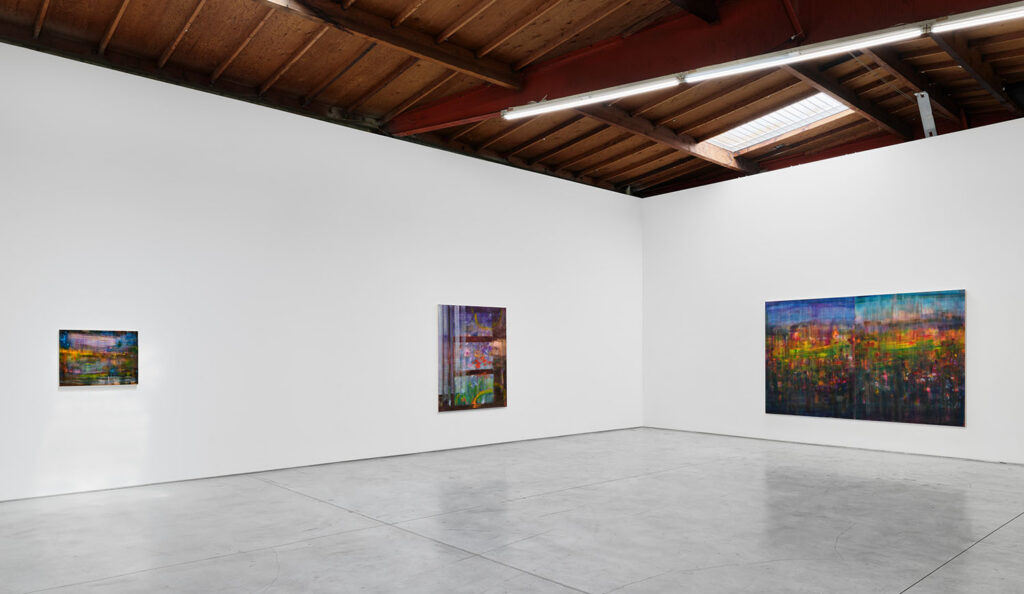
At Night Gallery, those considerations gradually receded. The paintings no longer needed to be understood through the techniques that produced them. They could simply be experienced as paintings.
This distinction reinforced something I consider essential to evaluating contemporary art:
An innovative technique may explain how a work is made, but it cannot, by itself, explain why the work matters.
The strongest paintings in Idea of North sustain attention beyond the novelty of their production. Their visual presence becomes more significant than the methods behind it.
Images, Memory, and the Idea of North
The paintings in Idea of North resist easy classification. Recognizable subjects emerge from restless fields of color, creating images that seem suspended between observation and recollection.
In Stars Are Falling Tonight (2026), the silhouette of a black dog appears amid vertical streaks of color. Its recognizable form provides a temporary point of orientation within an otherwise unstable landscape.
Amber Grove, Red Branch (2026) suggests a wooded environment illuminated by an almost artificial glow. Yellow and orange passages evoke foliage and sunlight, while a striking red branch interrupts the composition.
Elsewhere, 10:55pm (2026) introduces floral imagery through overlapping colors, while I Only See You In The Rain (2026) transforms recognizable forms into an atmospheric arrangement that seems to shift between presence and disappearance.
These paintings challenge the assumption that recognition necessarily produces clarity. The longer one looks, the more uncertain an image can become.
A flower dissolves into color. A landscape begins to resemble a reflection. An apparently abstract passage suddenly suggests depth or movement.
The experience resembles memory, which rarely preserves the past as a complete and stable image. Instead, memories return through fragments of color, light, atmosphere, and association.
Tong’s paintings seem to inhabit this uncertain territory. They do not necessarily depict specific memories, but evoke the process through which memories become images.
The exhibition’s title refers to The Idea of North, Glenn Gould’s 1967 experimental radio documentary, which combines overlapping voices and personal reflections on the Canadian North.
For Tong, born in Toronto and now working in Los Angeles, the reference introduces questions of geographical distance, memory, and the relationship between past and present.
In a published conversation with Arte Realizzata, Tong describes painting through ideas of perception and transmission, suggesting that images can emerge from sensations received from the surrounding world.
The analogy with Gould’s documentary is compelling. Where Gould layered voices to construct an auditory landscape, Tong layers colors, gestures, and fragments of imagery to create an unstable visual field.
Neither offers a single, authoritative perspective. Meaning emerges through the interaction of multiple elements.
In this sense, the North becomes less a geographical destination than an imagined space—something remembered, desired, or continually reconstructed.
Beyond Technique, Beyond Identity
Tong’s practice also invites consideration within the broader context of Asian diasporic art, although interpreting his paintings primarily through cultural identity would be reductive.
Questions of geography, memory, and displacement may resonate with diasporic experience, but his work does not depend on recognizable cultural symbols or explicit narratives of belonging.
Instead, it engages with more fundamental concerns about perception, materiality, and the relationship between internal experience and the visible world.
Artists from Asian and diasporic backgrounds are often expected to address heritage, migration, or cultural difference. While these perspectives can be meaningful, they should not become interpretive obligations.
Tong’s work suggests that an artist’s personal history can inform a practice without defining the limits of its meaning.
For ACFA, expanding the visibility of Asian creative practices also means recognizing artists beyond the boundaries of identity-based interpretation, allowing their work to be considered on its own formal, conceptual, and aesthetic terms.
When the Process Disappears
Looking back on my encounters with Ben Tong’s work, I find myself returning to the difference between the studio and the gallery.
The studio revealed how the paintings were made. The gallery revealed what they could become.
In the studio, the massage gun offered a memorable illustration of Tong’s willingness to introduce uncertainty into his process. At Night Gallery, that uncertainty had become something more substantial: a visual language.
The paintings brought together spontaneity and judgment, abstraction and recognition, physical material and immaterial light.
Their effectiveness did not depend on understanding every step of their production. Indeed, I found them more compelling when I stopped thinking about how they had been made.
This may be the exhibition’s most significant achievement.
A distinctive technique can attract attention and expand the possibilities of a medium, but it cannot guarantee a meaningful work of art.
That requires the artist’s ability to recognize, shape, and sustain an image that continues to engage the viewer after the process has ended.
Tong’s strongest paintings achieve this balance. They allow chance to participate in their creation without allowing chance to become their entire justification.
Ultimately, Idea of North is not simply an exhibition about light, memory, or unconventional painting techniques. It is an exploration of how images emerge, how perception shifts, and how artistic discovery remains possible within an unpredictable process.
The process may begin with uncertainty, but the painting succeeds when that uncertainty becomes something worth looking at.
Exhibition Information
Ben Tong: Idea of North
September 19 – October 31, 2026
Night Gallery, Los Angeles
Editorial Note
This review draws on the author’s firsthand experiences during a studio visit organized by LACMA’s Asian and Asian Diaspora Initiative (LAADI) and a subsequent visit to Idea of North at Night Gallery. Additional context is drawn from the gallery’s exhibition materials and published conversations with the artist.
Photography: Studio and exhibition photographs © Raymond Dong / ACFA, subject to confirmation of individual photo credits.