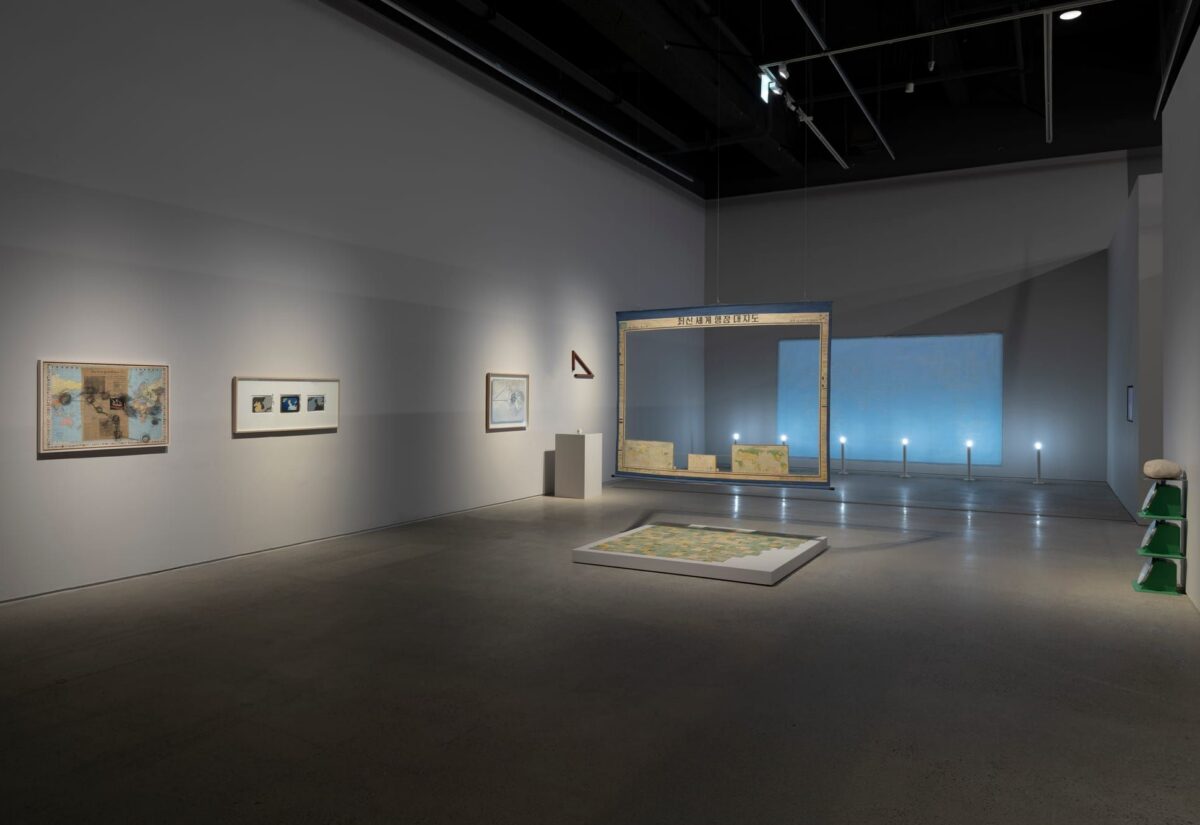
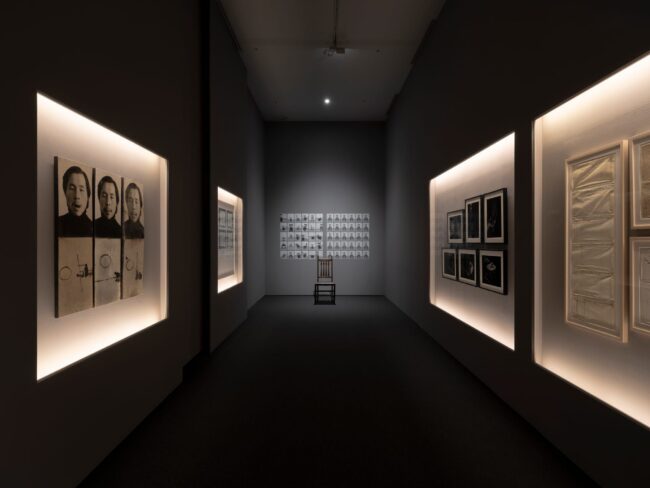
At MMCA Seoul, an exhibition with a deliberately unsettled title is asking visitors to slow down before they apply a familiar art-historical label. This is (Not) Conceptual Art, on view through 11 October, brings together approximately 140 works and archival materials by 28 artists. Rather than presenting Korean conceptual art as a local version of a movement defined elsewhere, the exhibition treats the term itself as a problem: useful, porous, and never quite sufficient for the practices it gathers.
That framing matters because the show is not merely a survey of objects that look spare or idea-driven. The National Museum of Modern and Contemporary Art, Korea organizes its account through four sections—Language, Logic, Performance; Objects and Language; Mapping and Measuring; and Manipulators of Signs. Across them, works made from the 1970s to the 2000s turn on instructions, maps, gestures, advertising, money, photography, performance documents, and acts of naming. The result is a history in which conceptual work is inseparable from the conditions under which Korean artists encountered modernity, institutions, language, and international circulation.
The exhibition opens a productive distance from the usual shorthand of “dematerialization.” Lee Kun-Yong’s Logic of Place (1975), represented through photographic documentation, makes a small movement—the artist stepping in and out of a drawn circle—carry a shifting relationship between words and location. “Here” and “there” do not settle into stable coordinates. That modest action gives the exhibition a useful key: ideas do not float above bodies and places; they are tested by them. The museum’s own presentation similarly emphasizes that Korean conceptual experiments did not simply abandon material form for language.
The exhibition’s lasting value may be its insistence that conceptual art has more than one chronology. Korean artists did not wait for permission to enter an established sequence; they developed propositions in conversation with the political, linguistic, and material realities around them. MMCA’s reframing leaves room for that complexity, asking audiences to see categories as tools to be tested rather than containers that close a history.
The Asian Creative Frontier Association (ACFA) is dedicated to empowering and celebrating Asian contributions across the arts, sciences, and culture. We provide a dynamic platform where artists, scientists, and innovators connect, collaborate, and showcase their work to inspire future generations. Through education, mentorship, and public engagement, we cultivate a thriving community that ensures Asian creativity and progress are globally recognized and valued.